
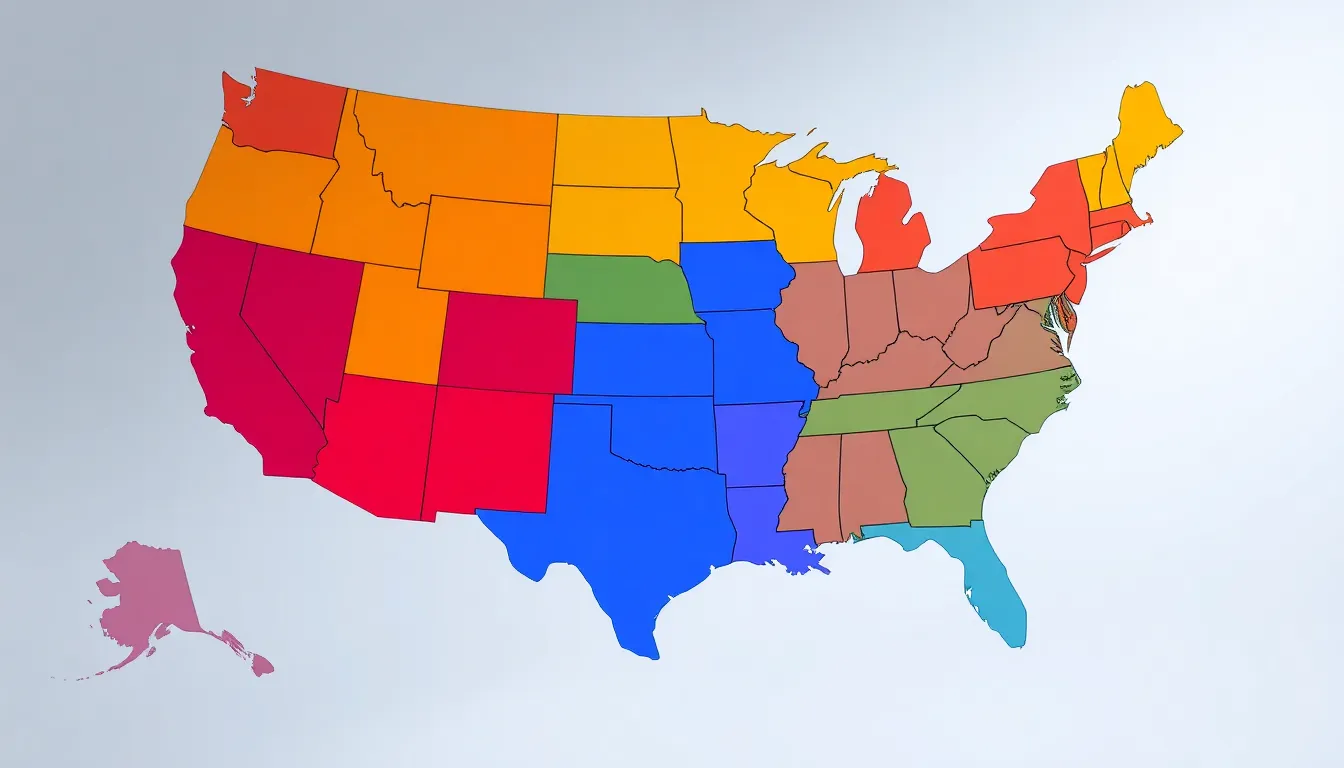
Understanding time zones is crucial for navigating daily life in the United States. With its vast geography, the country spans multiple time zones, each impacting everything from business operations to travel plans. A clear map of these time zones reveals how time varies across regions, highlighting the importance of synchronization in a fast-paced world.
From the bustling streets of New York to the serene shores of California, each time zone offers a unique rhythm. This article delves into the intricacies of the U.S. time zone map, exploring how these divisions affect communication, scheduling, and even cultural practices. Whether planning a cross-country trip or coordinating with colleagues in different states, knowing the time zones can make all the difference.
Overview of Time Zones in the US
The United States spans several time zones, affecting various states and territories. The main time zones in the continental US are:
- Eastern Standard Time (EST): UTC-5, observed in states like New York and Florida.
- Central Standard Time (CST): UTC-6, covering areas such as Texas and Illinois.
- Mountain Standard Time (MST): UTC-7, including parts of Colorado and Utah.
- Pacific Standard Time (PST): UTC-8, where states like California and Washington are located.
In addition to these primary zones, the US utilizes several other time zones, including:
- Alaska Standard Time (AKST): UTC-9, covering most of Alaska.
- Hawaii-Aleutian Standard Time (HAST): UTC-10, primarily for Hawaii and some Aleutian Islands.
- Atlantic Standard Time (AST): UTC-4, applicable to territories like Puerto Rico and the US Virgin Islands.
Daylight Saving Time (DST) further complicates the time zone landscape, shifting the clocks forward one hour in spring and back in autumn for the majority of states. States like Arizona and Hawaii do not participate in DST, maintaining their standard times year-round.
Navigating these time zones becomes critical for travel, communication, and business. Each zone contributes to the nation’s organizational structure, ensuring synchronization across diverse geographical areas. Awareness of local time zones promotes effective planning and coordination, enhancing overall productivity and experience.
Importance of Time Zones

Time zones play a vital role in structuring daily activities and facilitating economic interactions across the United States. Their significance extends to personal routines, business practices, and regional connections.
Impact on Daily Life
Time zones affect scheduling for activities such as work, school, and social events. For instance, a meeting scheduled at 10 AM in New York occurs at 7 AM in Los Angeles. Understanding these differences prevents confusion and ensures timely participation. Furthermore, they influence broadcast schedules for television shows and sporting events, altering when audiences engage with content across regions. Additionally, potential disruptions arise during transitions into and out of Daylight Saving Time, requiring awareness and adaptation for those living near time zone borders.
Economic Considerations
Time zones impact business operations and economic activities significantly. Companies engaged in national or international trade must account for time differences when coordinating communications or transactions. An example includes stock exchanges that operate within specific hours, necessitating precise timing for trades. Moreover, industries such as transport and logistics rely on synchronized schedules, ensuring timely deliveries across vast distances. An understanding of time zones enhances planning efficiency, improving productivity and profitability for organizations operating in multiple regions.
Map of Time Zones in the US
Understanding the map of time zones in the US is essential for effective scheduling and coordination. Time zones divide the country into regions that experience different local times, impacting various aspects of life and business.
Visual Representation
A visual representation of the US time zones clearly outlines boundaries and regions. The map distinguishes four main continental time zones: Eastern Standard Time (EST), Central Standard Time (CST), Mountain Standard Time (MST), and Pacific Standard Time (PST). Additional zones include Alaska Standard Time (AKST) and Hawaii-Aleutian Standard Time (HAST). Color coding on maps effectively highlights each zone, helping users quickly identify time differences across the nation.
| Time Zone | Offset from UTC | Example Cities |
|---|---|---|
| Eastern Standard Time (EST) | UTC -5 | New York, Washington D.C. |
| Central Standard Time (CST) | UTC -6 | Chicago, Dallas |
| Mountain Standard Time (MST) | UTC -7 | Denver, Phoenix |
| Pacific Standard Time (PST) | UTC -8 | Los Angeles, Seattle |
| Alaska Standard Time (AKST) | UTC -9 | Anchorage, Juneau |
| Hawaii-Aleutian Standard Time (HAST) | UTC -10 | Honolulu, Hilo |
Major Time Zones Explained
Each major time zone serves distinct regions, influencing schedules and activities.
- Eastern Standard Time (EST): Covers the eastern part of the US, including cities like New York and Boston. This zone is crucial for financial markets and national broadcasts.
- Central Standard Time (CST): Encompasses states like Texas and Illinois. CST affects many businesses in trade and manufacturing.
- Mountain Standard Time (MST): Includes states like Colorado and Utah. MST is significant for industries reliant on natural resources and tourism.
- Pacific Standard Time (PST): Covers the western coastal states, including California and Oregon. PST is pivotal for tech industries and entertainment.
Awareness of these time zones aids in effective planning, ensuring timely coordination across different regions.
Historical Context of US Time Zones
Time zones in the United States have a rich historical context that shaped their current framework. The establishment and evolution of these time zones reflect the country’s development in transportation, communication, and economic practices.
Establishment of Time Zones
Time zones emerged in the late 19th century, driven by the expansion of the railroad networks. The widespread adoption of train travel necessitated standardized time to ensure efficient scheduling and prevent accidents. In 1883, the U.S. adopted four primary time zones: Eastern, Central, Mountain, and Pacific. Sir Sandford Fleming, a Canadian engineer, proposed the division of the world into 24 time zones based on longitude, influencing this national standardization. Congress officially established the system on November 18, 1883, known as “The Day of Two Noons,” when local times across the country synchronized according to the new system.
Changes Over Time
Time zones have undergone significant adjustments since their initial establishment. In 1918, the U.S. introduced Daylight Saving Time (DST) during World War I as a means to conserve fuel. After the war, DST was abandoned until World War II, when it was re-implemented. The Uniform Time Act of 1966 standardized DST practices across the nation, though states could opt out, leading to the current scenario where Arizona and Hawaii do not observe DST. Additionally, some regions have proposed or enacted local time adjustments, reflecting shifts in economic activities and social preferences. These changes illustrate the ongoing evolution of time zones in response to societal needs and technological advancements.
Understanding the map of time zones in the US is essential for anyone looking to navigate the complexities of daily life and business operations. It shapes how people communicate schedule events and even enjoy leisure activities. With the diverse rhythms across regions the significance of being aware of these time differences cannot be overstated.
Whether coordinating meetings or planning a trip awareness of time zones fosters better interactions and smoother experiences. As society continues to evolve the importance of staying informed about time zones and their implications will only grow. Embracing this knowledge ultimately leads to more efficient planning and enhanced productivity across the nation.