

Finding the perfect bra size can be a game-changer for comfort and confidence. Yet many women struggle with the complexities of sizing, often relying on guesswork instead of accurate measurements. A bra size calculator simplifies this process, offering a straightforward way to determine the right fit without the hassle of trial and error.
Understanding how to use a bra size calculator can empower individuals to make informed choices when shopping for bras. By taking a few simple measurements, they can unlock the secret to finding bras that provide support and enhance their natural shape. This guide will explore the essential steps to measure bra size accurately and how a calculator can help achieve that perfect fit.
Understanding Bra Size
Accurate bra size measurement is vital for comfort, support, and overall well-being. Many women experience discomfort due to improperly fitting bras, leading to the need for precise sizing information.
Importance of Accurate Bra Sizing
Accurate bra sizing affects posture, breast health, and confidence levels. A well-fitted bra provides necessary support, reduces strain on shoulders and back, and enhances appearance. Studies indicate that approximately 80% of women wear the wrong size, which can lead to issues such as chafing, restricted movement, and discomfort. Knowing the correct size empowers individuals to choose bras that fit their body types comfortably, ensuring they can go about daily activities without distraction.
Common Bra Size Misconceptions
Several misconceptions surround bra sizing that can lead to errors in fitting.
- Cup Size Confusion: Many believe cup size alone determines fit. In reality, band size and cup volume work together to create the best fit.
- Changes in Size: It’s a common belief that bra size remains constant. Factors like weight fluctuations, hormonal changes, and aging contribute to changes in bra size.
- Brand Variability: Some think all brands use the same sizing systems. Different manufacturers have unique sizing, leading to variances even for the same size label.
- Self-Measurement: Many assume that measuring at home guarantees accurate results. Professional fittings often yield more precise measurements and can identify sizing nuances.
Understanding these aspects fosters a better approach to selecting bras that provide comfort and support.
How to Use a Bra Size Calculator
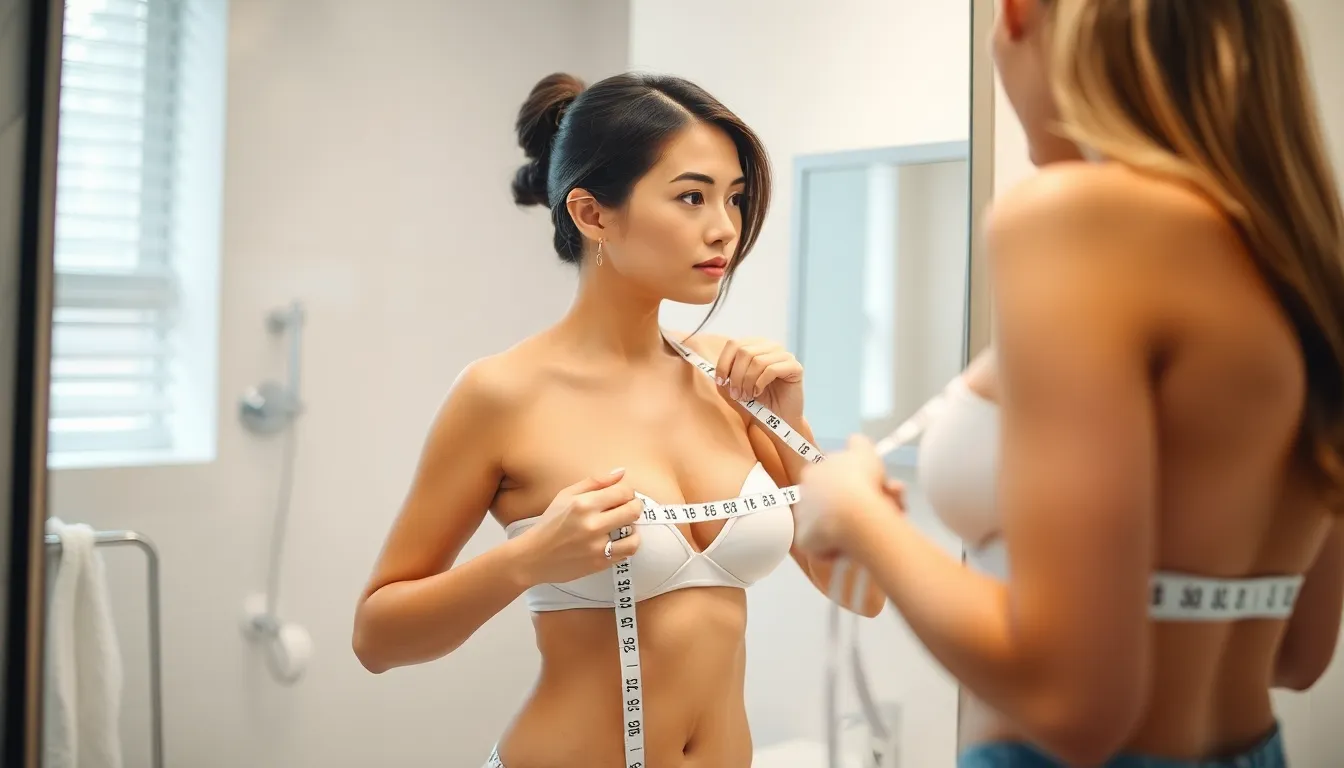
Using a bra size calculator simplifies the task of finding the correct size. Accurate measurements lead to a better fit, enhancing comfort and support.
Step-by-Step Guide
- Gather Materials: Find a soft measuring tape, a mirror, and a notepad for recording measurements.
- Measure Underbust: Wrap the measuring tape snugly around the ribcage, just beneath the breasts. Record this measurement in inches.
- Measure Bust: Position the tape around the fullest part of the breasts, ensuring it remains parallel to the floor. Note this measurement in inches.
- Calculate Band Size: Add 4 inches to the underbust measurement if it’s an even number or 5 inches if it’s odd. This total provides the band size.
- Determine Cup Size: Subtract the band size from the bust measurement. The difference in inches correlates to the cup size, with each inch representing a cup letter (1 inch=A, 2 inches=B, 3 inches=C, etc.).
- Verify Results: Input the band size and cup size into the bra size calculator for confirmation.
Tips for Best Results
- Wear a Bra: Use a well-fitting, non-padded bra to measure. This ensures accurate bust measurement.
- Stand Straight: Maintain good posture while measuring to get the most precise results.
- Use a Flexible Tape: Ensure the measuring tape is flexible for ease of wrapping around the body.
- Repeat Measurements: Measure more than once to confirm accuracy. Variations can happen with different body positions.
- Check Size Charts: Review the specific brand’s size chart, as sizing can differ between manufacturers.
Factors Influencing Bra Size
Bra size can change due to various factors, affecting fit and comfort. Understanding these influences helps individuals select the right size for their needs.
Body Changes Over Time
Body changes significantly impact bra size. Weight fluctuations, hormonal changes during menstrual cycles, pregnancy, and aging can alter breast shape and fullness. For instance, weight gain may increase breast volume, while weight loss could decrease it. Hormonal changes, particularly during puberty, pregnancy, and menopause, also play a critical role in determining breast size and firmness. Regular reassessment of bra size is essential to accommodate these changes, ensuring comfort and support.
Different Bra Styles and Their Impact
Bra style affects how size is perceived and fit achieved. Different styles, such as balconette, full coverage, and sports bras, offer various support levels and shapes. Each style may require adjustments in size due to differences in construction and fabric stretch. For example, a balconette bra may provide less coverage, potentially making a person feel a need for a larger cup size compared to a full-coverage style. Understanding how different bras accommodate breast shapes and sizes helps in selecting the most flattering and comfortable options.
Common Mistakes When Measuring Bra Size
Accurate measurements are crucial for finding the right bra size. Common mistakes during this process can result in discomfort and poor fit.
Incorrect Measurements
Relying on inaccurate measurements poses a significant risk. Individuals often measure without proper tools or guidance, leading to incorrect band and cup sizes. Using a soft measuring tape is essential. Measurement results can vary based on posture, clothing, and even the time of day due to natural body fluctuations. Rechecking measurements periodically helps ensure ongoing accuracy, especially during body changes, such as weight shifts or hormonal fluctuations.
Ignoring Band Size
Focusing solely on cup size often causes individuals to neglect band size, a critical factor in overall fit and support. A band that’s too loose or too tight can impact comfort and breast positioning. Proper band fit should feel snug without pinching. It should provide most of the support, with the cups serving to complement the fit. Individuals must remember that a bra size like 34B differs significantly from size 36A, even though the cup volume might seem similar. Prioritizing band size alongside cup measurements ensures a well-fitted and supportive bra.
Finding the right bra size is essential for comfort and confidence. Utilizing a bra size calculator simplifies the measurement process and empowers individuals to make informed choices. Regularly reassessing bra size is crucial as body changes can impact fit and support.
Understanding the nuances of sizing and different bra styles ensures that each person can select the best option for their unique shape. By avoiding common measurement mistakes and relying on accurate tools, individuals can enhance their overall well-being. A well-fitting bra not only improves posture but also boosts confidence, making it a vital aspect of daily life.